

Choosing the Right Filter for Your System
Your home’s heating and cooling system is a complex machine, but its health and efficiency often depend on one of its simplest components: the air filter. Tucked inside the furnace or air handler, this simple part does a critical job. For many homeowners in Idaho Falls, choosing a replacement filter has become a confusing task. The shelves are filled with options, from thin blue fiberglass filters to thick, multi pleated ones, all with different ratings and price tags.
It is tempting to either grab the cheapest option or assume the most expensive, thickest filter is the best choice. The truth is that the “right” filter is specific to your home and your HVAC system. Using the wrong one can do more than just fail to clean the air. It can actively harm your furnace and air conditioner, leading to higher energy bills and expensive repairs.
Understanding what your filter does, what the ratings mean, and how to balance filtration with airflow is key. This knowledge allows you to protect your investment and improve your home’s air quality. It is a small choice that has a significant impact on your home’s comfort and your system’s lifespan.
What is an HVAC Air Filter’s Real Job?
Many people believe the primary purpose of an air filter is to clean the air they breathe. While this is a very important secondary benefit, the filter’s original and most critical job is to protect the HVAC equipment itself. Your furnace and air conditioner are precision machines with sensitive components. The blower motor, evaporator coils, and heat exchanger are all vulnerable to the dust, lint, pet hair, and debris that naturally circulates through your home.
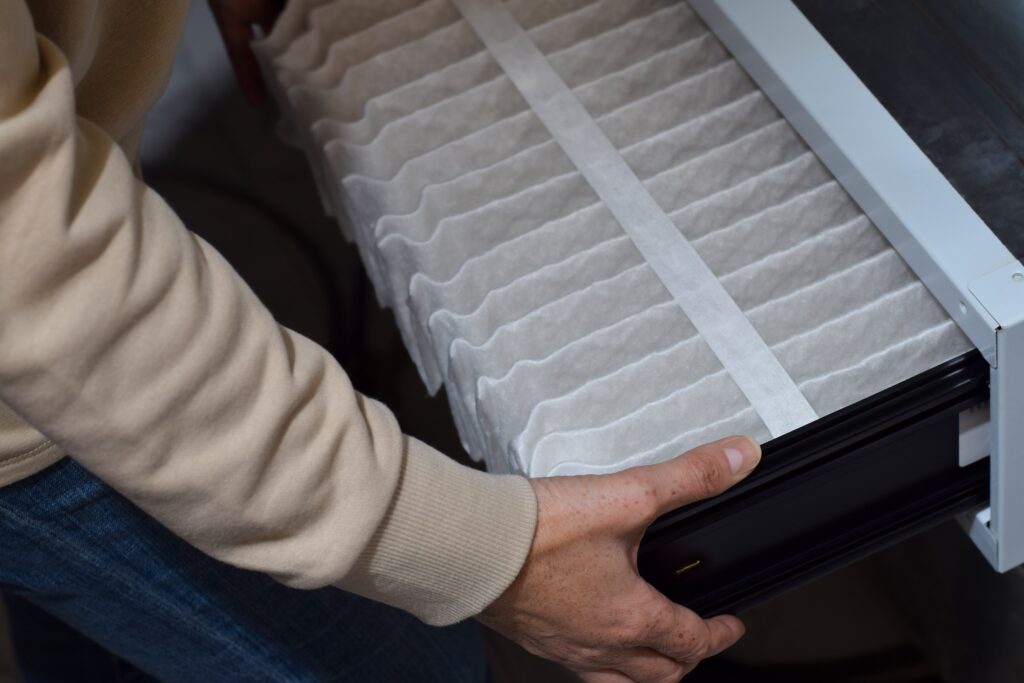
When air is pulled into the return ducts, it passes through the filter before it reaches this equipment. The filter is the first line of defense. It captures these particles, preventing them from building up on the blower motor, which can cause it to overheat and fail. It also stops debris from caking onto the indoor evaporator coil of your air conditioner. A dirty coil cannot transfer heat effectively, which forces your AC to run longer and harder, or even freeze up completely.
Need your furnace repaired? Click here to see our furnace repair service.
A clogged filter creates a problem of its own. As the filter fills with contaminants, air can no longer pass through it easily. This restricted airflow forces the entire system to work much harder to move air. This strain leads directly to higher energy bills, reduced comfort, and a much shorter lifespan for your equipment. In a sense, the filter is protecting your system from the air in your home, and it must be changed regularly to continue doing its job.
Understanding MERV Ratings
To help consumers compare filters, a standardized rating system called MERV is used. MERV stands for Minimum Efficiency Reporting Value. This rating, which typically ranges from 1 to 16 for residential use, measures how effectively a filter removes microscopic particles from the air. A higher MERV rating means the filter can trap smaller particles, and more of them.
Filters at the low end of the scale, such as MERV 1-4, are designed to catch only the largest particles. This includes things like lint, carpet fibers, and large dust. These filters provide basic protection for the furnace but do very little to improve your indoor air quality.
The MERV 5-8 range is often considered a good standard for most residential homes. These filters are much better at capturing smaller particles like mold spores, dust mite debris, and pollen. They offer a good balance of equipment protection and air quality improvement.
Filters rated MERV 9-12 are a step above. They are excellent for households with pets or people who suffer from allergies. These filters can trap fine particles like pet dander, auto emissions, and finer dusts.
At the high end, MERV 13-16 filters provide superior filtration. They are dense enough to capture bacteria, tobacco smoke, and even some virus carriers. While this level of filtration is excellent, these high-efficiency filters are not suitable for all HVAC systems, as we will explore.
The Different Types of Air Filters
The MERV rating is closely tied to the filter’s construction. There are several common types you will find. The most basic is the disposable fiberglass filter. These are the flat, blue or green filters that are very inexpensive. They have a very low MERV rating, often between 1 and 4. Their open weave is designed to stop only the largest particles. They protect the furnace from large debris but allow pollen, dander, and fine dust to pass right through.

A significant upgrade is the pleated filter. These are typically made of polyester or cotton paper. The “pleats” or folds in the material dramatically increase the surface area of the filter. This increased surface area allows them to capture far more particles without immediately clogging up. Pleated filters are the most common type and are available in a wide range of MERV ratings, typically from 5 all the way up to 13.
Want to improve your air quality? Click here to see why duct cleaning is important.
Washable or reusable filters are another option. These have a static charge that attracts particles. The appeal is in their cost effectiveness, as you can wash and reuse them for several years. However, they have drawbacks. They generally have lower MERV ratings. They must also be cleaned meticulously. If they are not completely dry before being reinstalled, they can become a breeding ground for mold and mildew inside your HVAC system.
You may also hear about HEPA filters. HEPA stands for High-Efficiency Particulate Air. A true HEPA filter is the gold standard of air cleaning, trapping 99.97 percent of particles. It is important to know that most residential HVAC systems are not designed to use HEPA filters. The filter material is so dense that it would severely choke off the system’s airflow, leading to certain damage. True HEPA filtration is typically achieved with a separate, standalone air purifier or a specialized system installed by a professional.
The Critical Balance Between Airflow and Filtration
Choosing a filter is not as simple as buying the highest MERV rating you can find. There is a critical trade off between filtration and airflow. The denser the filter material (the higher the MERV rating), the more resistance it creates for the air being pulled through it. This resistance is known as “static pressure.” Every furnace blower is designed to handle a certain amount of static pressure.
If you install a filter that is too restrictive for your system, you are essentially forcing your furnace to breathe through a straw. The blower motor has to run harder and longer to pull enough air. This leads to a cascade of problems. First, your energy bills will go up because the motor is using more power. Second, the motor will overheat, significantly shortening its life and leading to a costly breakdown.
This restricted airflow also reduces the amount of warm or cool air delivered to your rooms, making your home less comfortable. In the winter, the furnace itself can get too hot, causing it to shut down on a safety switch. In the summer, the lack of warm air moving over the cold evaporator coils can cause them to freeze solid, which can destroy your air conditioner’s compressor. The “best” filter is one that your system can actually handle.
How to Choose the Right Filter for Your Home
So, how do you find the right filter? The first place to look is your HVAC system’s manual. The manufacturer will almost always specify the type of filter to use or, in some cases, a maximum MERV rating that the system can safely handle. Never exceed this recommendation.

Next, consider the filter’s thickness. Many homes use standard 1-inch thick filters, which must be changed every 1 to 3 months. However, many systems can be retrofitted with a 4-inch or 5-inch thick media filter cabinet. These “media filters” are a fantastic upgrade. Because they are so thick and have so many pleats, they have a massive amount of surface area. This design allows them to have a high MERV rating (like 11 or 13) while still allowing for excellent airflow. As a bonus, they only need to be changed once or twice a year.
Finally, evaluate your home’s specific needs. If you have no pets and no allergies, a good quality MERV 8 filter may be perfect. If you have dogs, cats, or family members with asthma, upgrading to a MERV 11 or 13 filter could make a significant difference in your comfort, provided your system can handle it.
If you are unsure, the best course of action is to consult a professional. An HVAC technician from Minuteman Services can do more than just guess. We can perform a static pressure test on your system to determine exactly how restrictive a filter your furnace can safely support. We can also install a media filter cabinet if you are looking to upgrade your filtration without sacrificing performance.
The humble air filter is a small but mighty component of your HVAC system. It is your first line of defense in protecting expensive equipment and your first step toward cleaner indoor air. Choosing the right filter is a balancing act. You must weigh your desire for clean air against your HVAC system’s need for adequate airflow. A filter that is too dense, even if it has a high MERV rating, can starve your system of air, leading to inefficiency and damage.
Always check your manufacturer’s recommendations. Consider your family’s health needs, such as allergies or pets. And remember that a 1-inch filter needs to be replaced frequently, while thicker media filters offer a high-performance, low-maintenance alternative. If you are in the Idaho Falls area and have questions about your filter or are interested in upgrading your system, the experienced team at Minuteman Services is here to help. We can ensure you have the right filter to keep your system running efficiently and your home’s air clean for years to come.