
Drafty Rooms? Here’s What Your HVAC Tech Will Check
The deep chill of an Idaho Falls winter highlights every flaw in a home’s heating system. While the furnace may be running, the reality for many homeowners is a patchwork of inconsistent temperatures. One room is comfortable, while the bedroom at the end of the hall feels noticeably colder, creating a drafty, uncomfortable zone that no amount of blanket layering seems to fix. It is a common misconception that this uneven heating is solely the fault of old windows or poor exterior insulation. While the building envelope certainly plays a role, the core issue often lies within the structure and operation of the home’s heating, ventilation, and air conditioning (HVAC) system.
When an HVAC technician from Minuteman Electric & HVAC is called to investigate a drafty or uncomfortable room, their approach is systematic. They treat the home as an interconnected system, understanding that a problem in the furnace or the ductwork in the attic directly impacts the comfort level two rooms away. They do not simply look at a window; they check the air delivery mechanism, the balance of the system, and the overall capacity. A professional diagnostic reveals that many drafts are not cold air rushing in but warm air being improperly delivered or escaping elsewhere.
Finding the root cause of these drafty rooms requires expertise in airflow dynamics, building science, and component reliability. By focusing on the efficiency and integrity of the air delivery system, technicians can uncover hidden problems that lead to permanent comfort solutions and lower energy bills.
The Primary Culprit: Ductwork Leaks and Damage
The most common reason a room feels drafty or chronically cold is a compromised ductwork system. The ducts are essentially the veins and arteries of your HVAC system, responsible for moving conditioned air from the furnace to every living space. When ducts are installed, especially in older homes, they are often joined imperfectly, and over time, the mastic or tape sealing those joints can crack, crumble, or simply peel away.
These holes and gaps, particularly those located in unconditioned spaces like the attic, crawlspace, or basement, allow precious warm air to escape before it ever reaches the registers in your rooms. The Department of Energy estimates that the average home loses 20 to 30 percent of its conditioned air through duct leaks. In a cold climate like Idaho Falls, this means homeowners are literally paying to heat the cold air in their attic instead of the air in their living room.
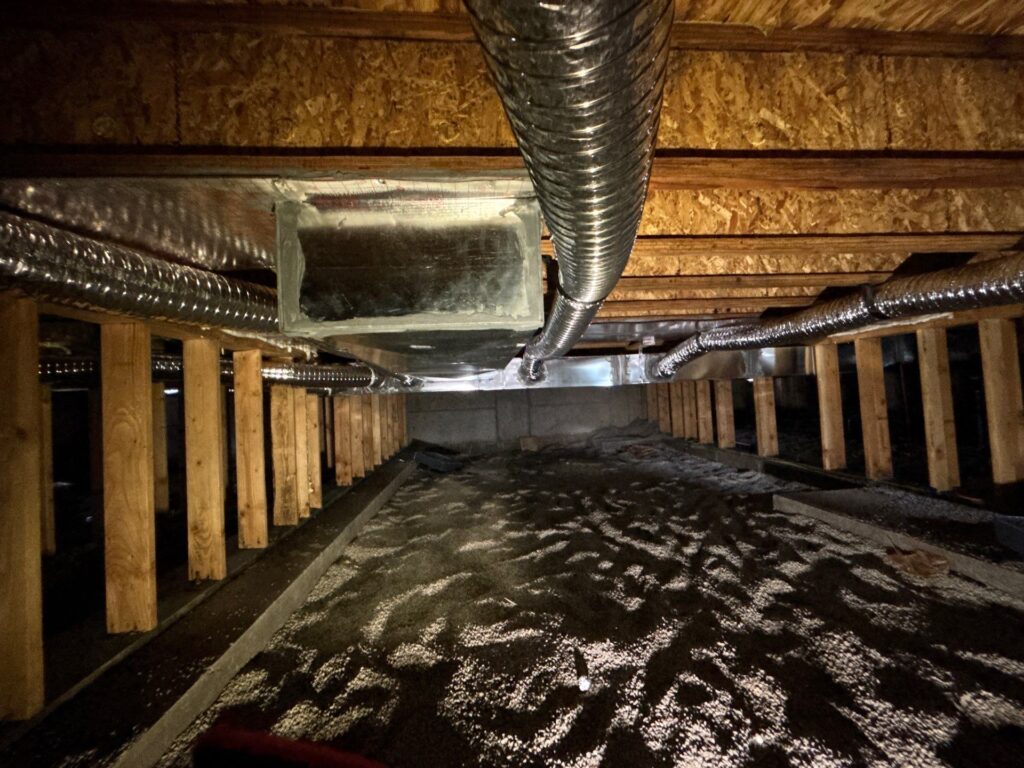
An HVAC technician will use specialized tools to inspect the ductwork visually and, in some cases, employ a pressure test to find the exact location of the leaks. They look for signs of sagging, crushing, or complete disconnection of the ducts. Furthermore, they pay close attention to the return air ducts. If the return air system is leaky, it will suck cold, unconditioned, and often dusty air into the furnace, where it mixes with the warm air. This significantly dilutes the temperature of the air being distributed, reducing the heating capacity and making the affected rooms feel noticeably drafty.
Airflow Blockages and Zoning Issues
Even if your ductwork is perfectly sealed, the system can still suffer from chronic inefficiency and uneven heating if the airflow is blocked at either the intake or the output. One of the first, most basic checks an HVAC technician performs is inspecting the air filter. A dirty, clogged filter chokes the system at the intake, starving the blower motor and restricting the volume of air that can be moved throughout the house. This restriction often manifests as low pressure at the vents farthest from the furnace, making those rooms feel chilly and drafty.
Need furnace maintenance? Click here for our furnace maintenance service.
Technicians also check the vents and registers themselves. While you may have already checked, the professional ensures that no supply registers are inadvertently closed or obstructed by furniture, rugs, or long curtains. Similarly, they check the return air grilles. If a large return is blocked by a piece of furniture, the system struggles to “breathe,” increasing static pressure and preventing the warm air from circulating effectively.
For homes with multi zone systems, the technician will thoroughly inspect the dampers and zoning controls. Dampers are mechanical plates or valves inside the ductwork that open and close to direct heated air to specific zones based on thermostat demand. If a damper is stuck open, it might be dumping heat into an unused area. If a motorized damper is malfunctioning, it may be partially blocking air to a zone that is calling for heat, leading to that distinct drafty feeling in the affected room. Ensuring the entire duct system is properly balanced and calibrated is essential for equalizing comfort across the home.
The Thermostat and Control System
The thermostat is the primary interface for your comfort, and its proper placement and function are absolutely critical to preventing drafty rooms. An HVAC technician will check the thermostat not just for calibration but for its environmental placement. If the thermostat is located near a heat source, such as a sunny window, a heat lamp, or a kitchen appliance, it will register a false high reading. This causes the system to cycle off too early, leaving the extremities of the house cold and drafty.
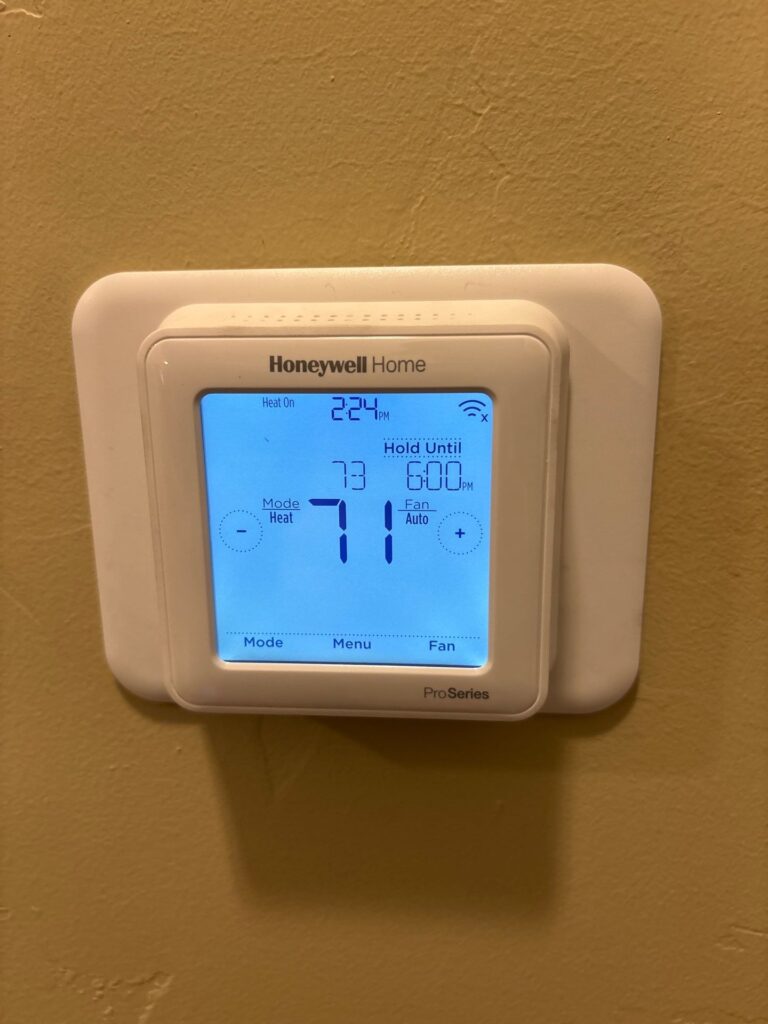
The technician also checks the system’s “short cycling” behavior. If the furnace is turning on and off too frequently, it is not running long enough to establish a stable air temperature throughout the entire duct run. The furnace heats the air, but the extremities of the system, which take the longest to fill with warm air, never reach their set point before the system shuts down. A technician can diagnose whether this short cycling is due to a miscalibrated thermostat or a safety issue within the furnace itself.
In a zoned system, the control board that manages the multiple thermostats is thoroughly inspected. A failure on the zone control board can cause one zone’s dampers to remain fully closed while another’s remain fully open, completely disrupting the designed airflow balance and creating massive temperature differentials throughout the house. Diagnosing these electrical control issues requires the specialized dual expertise in HVAC and electrical systems that Minuteman Electric & HVAC provides.
Mechanical Problems Causing Low Airflow
Even if the ducts and controls are perfect, the mechanical heart of the system must be pushing air with enough force and temperature to overcome the cold air infiltration common in the Idaho climate. The technician meticulously checks the components responsible for the air movement and the heat production.
The health of the blower motor and its capacitor is essential. The capacitor provides the initial electrical burst required to get the blower motor spinning at full speed. A weak or failing capacitor can prevent the motor from reaching its optimal rotations per minute, reducing the velocity and volume of air pushed through the ductwork. This reduction in air force means the warm air cannot effectively displace the cold air in a distant room, leaving it drafty and cold.
Furnace making noises? Click here to see what they mean.
For the heat production itself, the furnace’s internal components are assessed. The heat exchanger, burners, and combustion chamber are inspected. If the burners are dirty or improperly adjusted, they produce less heat from the gas, resulting in warm air that is simply not hot enough to satisfy the demands of the house. Similarly, the evaporator coils, even in a winter furnace setting, can affect performance. If they are excessively dirty, the system cannot function efficiently, reducing its overall heat transfer capability.
The Whole Home Approach: Air Sealing and Insulation
While the HVAC technician’s primary responsibility is the mechanical system, they understand that the system is only as good as the house that surrounds it. When a professional investigates a draft, they often find that the HVAC system is simply losing the battle against the house’s exterior envelope.
The technician will use diagnostic tools like a thermal camera or smoke pencil to find signs of extreme air infiltration. They trace major drafts coming from non HVAC related areas: around electrical outlets, along baseboards, through poorly sealed doors, and around utility penetrations where pipes or cables enter the home. This cold air infiltration creates the sensation of a draft that the furnace constantly struggles to overcome.
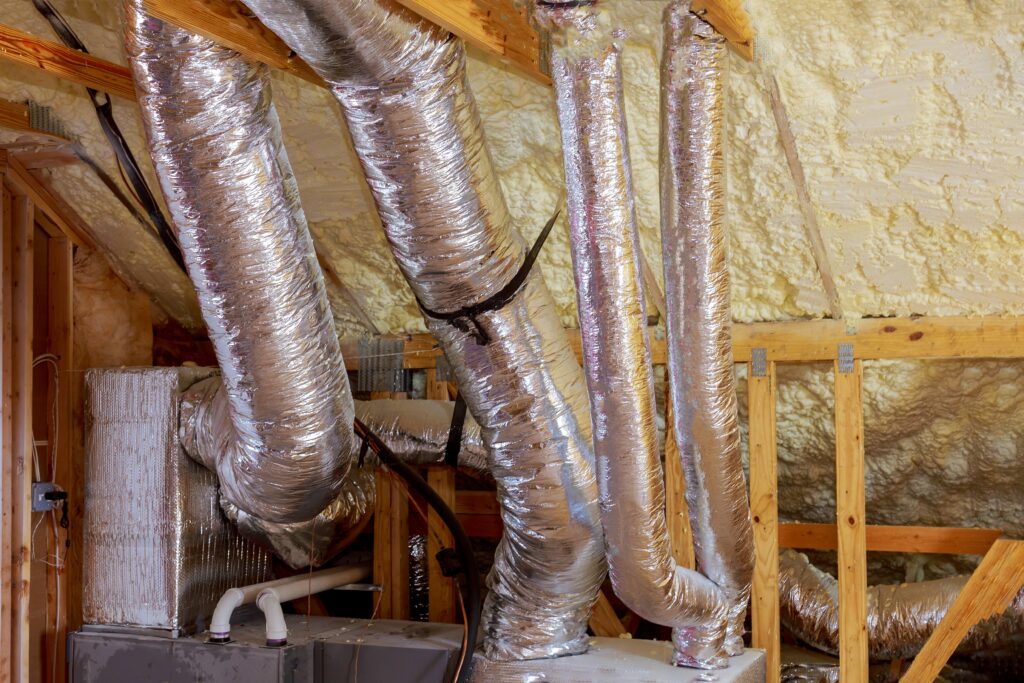
The technician also assesses the insulation levels, particularly in the attic. Heat rises, and if the attic insulation is insufficient, heat is lost rapidly, placing an impossible load on the HVAC system. If insulation is thin or uneven, the furnace has to run constantly, but the heat escapes before it can balance the temperature throughout the home. Minuteman Electric & HVAC can identify these envelope issues. While the solution may require working with an insulator or a carpenter, identifying these exterior causes prevents the homeowner from spending money on unnecessary HVAC repairs.
Permanent Solutions for Balanced Comfort
After a thorough diagnostic, the HVAC technician can recommend tailored, permanent solutions that restore balanced comfort and increase efficiency.
The most common repair is professional duct sealing. Using specialized mastic sealant—a flexible, durable compound—the technician seals all the leaks and gaps found in the ductwork. This process immediately ensures that the valuable conditioned air reaches the intended rooms, stopping the energy hemorrhage into the attic or crawlspace. Duct insulation may also be added to ducts running through cold spaces to prevent heat loss in transit.
For homes with complex airflow issues, a proper zoning system installation may be required. This uses motorized dampers, controls, and often a variable speed furnace to manage airflow and temperature independently across different areas of the home. This level of control ensures that a cold room gets the heat it needs without overheating the rest of the house. Finally, if the system is determined to be severely undersized or outdated, the long term solution involves upgrading the furnace or heat pump to a high efficiency model that can adequately handle the square footage and specific demands of the Idaho climate.
Drafty rooms are a clear signal that the intricate balance of your home’s thermal and air delivery systems has been compromised. The cause is rarely a simple windowpane; it is most often found in compromised ductwork, airflow blockages, or a system imbalance that prevents warm air from reaching its destination. An experienced HVAC diagnostic approach finds the root cause—be it a tiny leak in the return duct or a failing blower capacitor—and addresses the problem at its source. For permanent comfort, efficiency, and lower energy bills in the Idaho Falls climate, trust the comprehensive diagnostic services of Minuteman Electric & HVAC. We can assess your entire system and restore balanced, consistent warmth to every room in your home.